Building engagement for the ASNT project
Landscape architecture students design inclusive trails for Pocahontas State Park
Read the story on Virginia Tech News (April 25, 2025)
The Accessible Sensory Nature Trail project was selected by Virginia Tech for its annual Richard G. Gibbons Virginia Public Open Space Charrette, a competition within the Landscape Architecture Department. The intent is to support students in a community engagement project focused on responsive design solutions for public, open spaces that make a real difference.
Early in the year, Friends of Pocahontas State Park invited a group of 70 students and faculty from Virginia Tech to participate in a tour and discussion about the project. Members of the ASNT steering committee, Pocahontas State Park and Department of Conservation and Recreation staff, as well as representatives from the disabled community, non-profit organizations, and other Virginia state agencies were on hand to provide insights, answer questions, and exchange ideas to help the students design plans for the trail.
At left, students, staff, and community advocates convened at Pocahontas State Park to help create a master plan for the Accessible Sensory Nature Trail as part of a student competition.
Terry Clements (far right), professor and chair of the landscape architecture program in the School of Design, helped plan and lead the charrette.
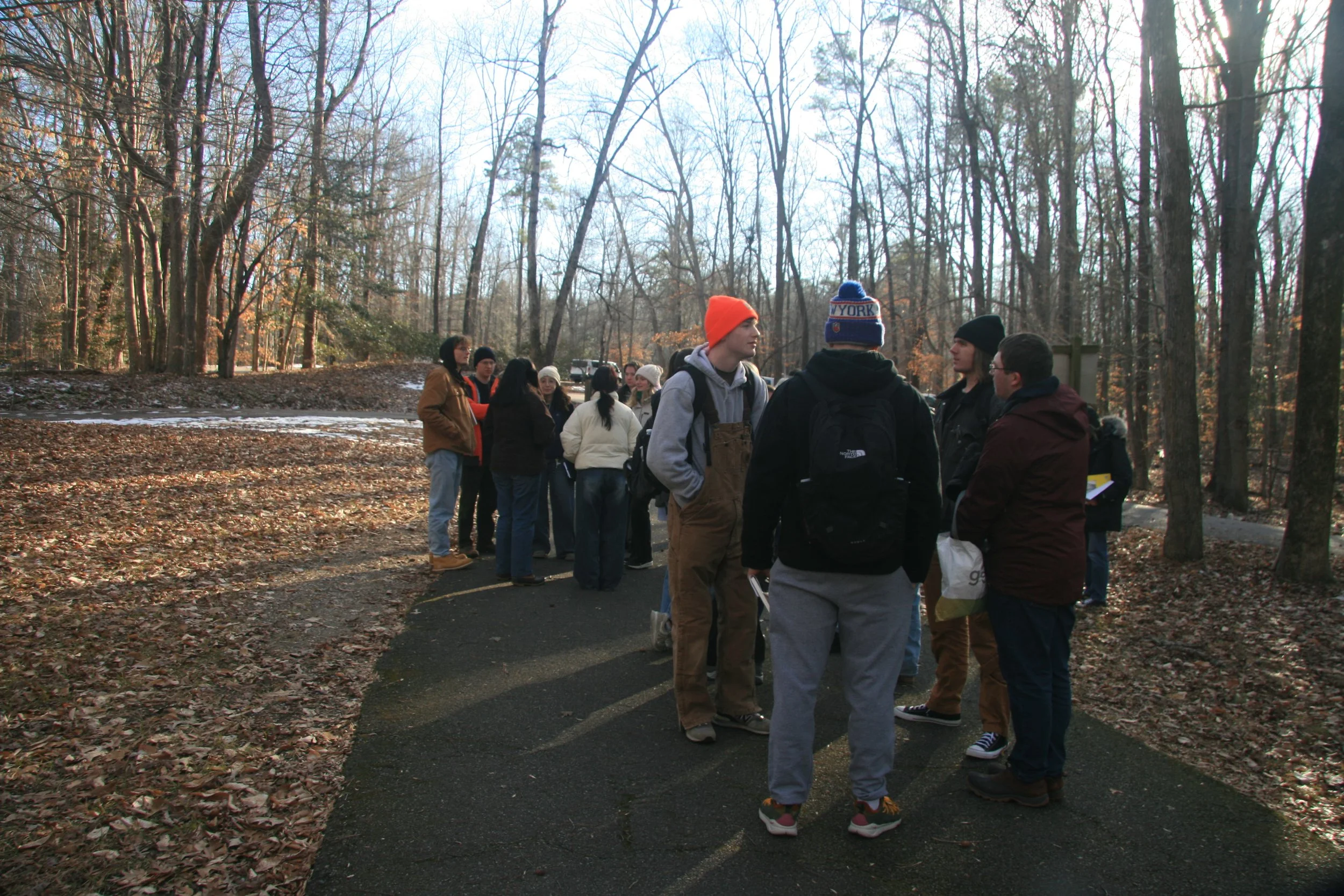
Virginia Tech landscape architecture students explore the proposed site for the ASNT.
All of the students, from freshmen to graduate students, participated in vertically integrated teams. Nine teams of future landscape architects had five days to visit the park with community partners and park stakeholders, assess needs and solutions, develop goals for trail improvement, and create a final design for the master plan. The teams presented their concepts to the their professors, the ASNT steering committee, and park staff on the final day of the charrette.
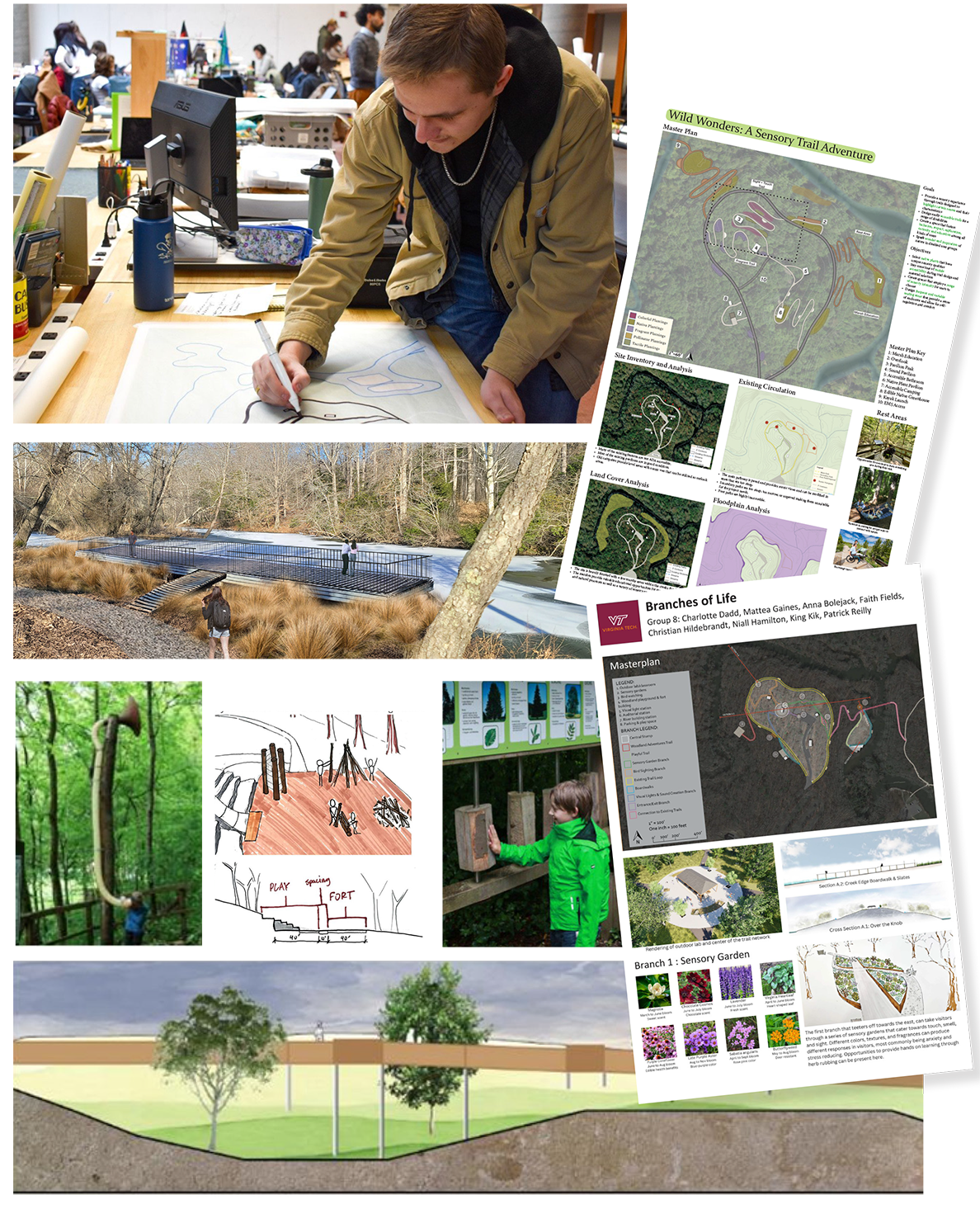
At top, charrette participant and fifth-year landscape architecture student Alex Pomeroy works on his team’s plan for the park’s proposed sensory trail in the Burchard Hall studio space. (Photo by Sarah Prichard for Virginia Tech.)
The resulting nine proposals were extremely impressive, creative, and well-researched, each offering variations of solutions to the potential design and scope of the nature trail. We are excited to incorporate the students’ concepts in our ongoing planning process as the project continues to evolve.